
 Español
 Français
 Deutsch
 한국어
한국어


Airless Bottle Packaging has become an important solution for modern Skincare Products, especially creams, serums, and lotions that require clean dispensing, controlled dosage, and convenient daily use. Compared with traditional Cosmetic Containers, airless Bottle Packaging uses a mechanical dispensing structure to move the formula toward the Pump outlet without relying on a conventional dip tube. This design gives brands more flexibility when developing practical and attractive skincare packaging.
For creams, serums, and lotions, selecting the Right Airless Bottle requires more than choosing an attractive shape. Brands need to consider formula viscosity, capacity, pump dosage, material, compatibility, filling method, decoration, transportation, and consumer usage. The airless bottle packaging must work effectively with the actual formula throughout the product's intended service life.
This guide explains how airless bottle packaging works with creams, serums, and lotions, what advantages it can provide, how to select the Right Capacity and pump, and what manufacturers should consider during customization and mass production.
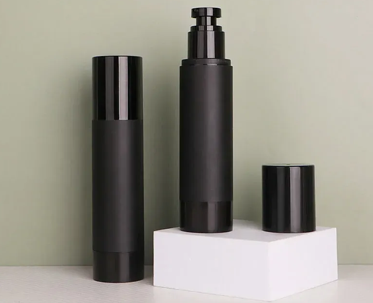
What Is Airless Bottle Packaging?
Airless bottle packaging is a Cosmetic Packaging system designed to dispense formulas through a pump while using an internal mechanical structure. Depending on the design, the airless bottle may contain a piston or another moving component that helps push the formula upward as the product is dispensed.
The basic airless bottle packaging system normally includes a bottle body, internal dispensing structure, pump, actuator, and protective cap. Different models can have different capacities, shapes, materials, pump dosages, and internal configurations. This means airless bottle packaging is not a single standardized structure. The packaging should always be selected according to the formula and intended application.
The purpose of airless bottle packaging is to create controlled and convenient dispensing. It can reduce the need for consumers to directly contact the formula and can provide a more consistent application experience. These characteristics make airless bottle packaging particularly suitable for creams, serums, lotions, moisturizers, gels, and other skincare products.
Why Use Airless Bottle Packaging for Creams?
Creams are often thicker than serums and lotions, so packaging must provide suitable dispensing performance. Airless bottle packaging can be designed with a pump system that matches the viscosity and flow characteristics of the cream.
A cream packaged in an airless bottle can be dispensed without requiring the user to repeatedly open a jar and touch the product. The pump provides a controlled application method and can help create a cleaner user experience. For brands selling daily skincare creams, this practical benefit can be important.
Airless bottle packaging also provides flexibility in product presentation. Cream packaging can be developed in different capacities, shapes, colors, and surface finishes. A brand can select a simple bottle design for everyday skincare or develop a more customized appearance for a premium product line.
However, cream viscosity should always be tested with the actual airless bottle and pump. A very thick cream may require a suitable dispensing channel and pump configuration. Packaging selection should therefore be based on real formula testing rather than appearance alone.
Airless Bottle Packaging for Serums
Serums are another common application for airless bottle packaging. Many serums have relatively fluid textures and require controlled dispensing because the recommended application amount may be small. A suitable airless bottle can provide accurate and convenient product delivery.
For serum packaging, pump dosage is particularly important. If the pump releases too much product with each press, consumers may waste formula. If the dosage is too small, users may need several presses for one application. The correct airless bottle packaging should therefore balance pump dosage, formula viscosity, product positioning, and consumer habits.
Airless bottle packaging can also give serum products a clean and professional appearance. Clear or opaque packaging, customized colors, printing, and surface treatments can all be considered according to the brand's packaging concept.
Before mass production, the serum should be tested inside the selected airless bottle. Testing should examine dispensing consistency, leakage, formula compatibility, pump activation, and overall packaging performance.
Airless Bottle Packaging for Lotions
Lotions usually have a lighter texture than creams but are thicker than many water-like cosmetic formulas. This makes lotion packaging another useful application for airless bottle packaging.
An airless bottle for lotion should provide smooth dispensing without excessive force. The pump should be matched to the lotion's viscosity so that the consumer can easily obtain a suitable amount. If the pump and formula are not properly matched, dispensing may become inconsistent.
Capacity is also important for lotion products. A daily-use body lotion may require a larger airless bottle, while a facial lotion may use a smaller capacity. Travel products may require compact packaging, while professional or family-use products may require larger containers.
By selecting the correct airless bottle packaging, brands can create different product sizes while maintaining a consistent visual identity across a skincare collection.
How Does Airless Bottle Packaging Work?
The working principle of airless bottle packaging is based on controlled mechanical movement. When the user presses the pump, the internal mechanism moves the formula toward the dispensing outlet. As the product is gradually used, the internal component changes position to help maintain product delivery.
This differs from a traditional lotion bottle that often uses a dip tube extending into the formula. The exact operation of an airless bottle depends on its internal construction, but the objective remains controlled dispensing.
When a new airless bottle is used for the first time, several pump presses may sometimes be necessary before the formula reaches the outlet. This is commonly referred to as priming. The exact activation process depends on the bottle and pump structure.
Brands should test the complete airless bottle packaging system rather than evaluating the pump separately. The formula, bottle, piston or internal structure, pump, and closure need to work together.
Formula Compatibility and Airless Bottle Packaging
Formula compatibility is one of the most important factors in selecting airless bottle packaging. Creams, serums, and lotions can vary significantly in viscosity, ingredient composition, flow behavior, and storage requirements.
A packaging system that performs well with one formula may not provide identical results with another formula. For example, a thick cream may require a different pump configuration from a lightweight serum. A lotion with a different viscosity may also require a different dosage or dispensing channel.
Compatibility testing should use the actual formula intended for commercial production. The test should evaluate the appearance of the formula, dispensing performance, pump activation, leakage, packaging condition, and stability over an appropriate period.
Airless bottle packaging should also be evaluated under realistic storage and transportation conditions. Temperature changes, vibration, handling, and long-distance transportation can affect the finished packaging system.
Choosing the Right Airless Bottle Capacity
Capacity is a major consideration when developing airless bottle packaging for creams, serums, and lotions. Common cosmetic packaging capacities vary according to product type, market positioning, application frequency, and expected product consumption.
Smaller Airless Bottles are often suitable for concentrated serums, eye-care products, travel products, and trial sizes. Medium-capacity airless bottle packaging can work well for facial creams, moisturizers, and daily skincare products. Larger bottles may be appropriate for body lotions and products designed for frequent application.
Capacity should also be considered alongside pump dosage. A larger bottle does not necessarily require a larger dosage per pump. Brands should determine how much product consumers are expected to use each time and select the pump accordingly.
The physical dimensions of the airless bottle also affect packaging design. Height, diameter, base stability, cap size, and label or printing area should all be considered before finalizing the packaging.
Material Selection for Airless Bottle Packaging
Material selection affects the appearance, durability, weight, processing, and customization of airless bottle packaging. Different cosmetic packaging projects may require different plastic materials according to the product and design requirements.
Brands should consider formula compatibility, mechanical strength, transparency requirements, appearance, surface finishing, and transportation conditions when selecting materials. The material should provide sufficient structural performance for filling, assembly, storage, transportation, and consumer use.
Airless bottle packaging can also be customized with different colors and surface treatments. Depending on the design, options may include color matching, silk-screen printing, hot stamping, electroplating, frosting, and other decorative processes.
When choosing decorative treatments, brands should consider how the finished airless bottle will be handled during filling, packaging, transportation, and daily consumer use. Appearance quality should remain consistent throughout the product's normal service life.
Pump Dosage and Dispensing Performance
The pump is one of the most important components of airless bottle packaging. Pump dosage determines how much cream, serum, or lotion is released during each press. Selecting an appropriate pump dosage can improve user convenience and reduce unnecessary product waste.
For serum products, a smaller dosage may be suitable when consumers use only a small amount per application. For creams and lotions, the appropriate dosage depends on the product type and recommended usage. The correct dosage should be determined through practical testing.
Brands should also evaluate how easily the pump can be activated. A pump that requires excessive force may create a poor user experience, especially for products used frequently. A properly matched pump should provide smooth and consistent dispensing.
Customization of Airless Bottle Packaging
Customization is an important part of modern airless bottle packaging development. Cosmetic Brands can customize bottle shapes, colors, capacities, pump systems, caps, and surface finishes according to their product positioning.
Custom molds can be developed from technical drawings or physical samples. Mold development allows brands to create unique bottle shapes rather than relying only on standard packaging models. However, customized airless bottle packaging requires careful consideration of mold structure, production feasibility, assembly, and cost.
Color matching is another common requirement. A specific color can help create a consistent visual identity across creams, serums, and lotions. Surface decoration can then be added through printing, hot stamping, electroplating, frosting, or other finishing processes.
The packaging should be evaluated after customization to confirm that decoration does not interfere with assembly, filling, pump operation, or transportation.
Filling Airless Bottle Packaging Correctly
The filling method depends on the specific airless bottle structure. Not every airless bottle uses the same filling process. Some packaging systems are designed for specific filling equipment or assembly procedures.
Before filling, the bottle should be inspected for damage, contamination, or foreign particles. The formula should be prepared according to its manufacturing requirements, and its viscosity and temperature should be checked where relevant.
Filling quantity should remain consistent throughout production. Overfilling may interfere with the internal mechanism, while underfilling can affect the expected product quantity and consumer experience.
After filling, the pump and other components should be assembled according to the manufacturer's instructions. Finished airless bottle packaging should then be inspected for leakage, pump performance, appearance, and assembly quality.
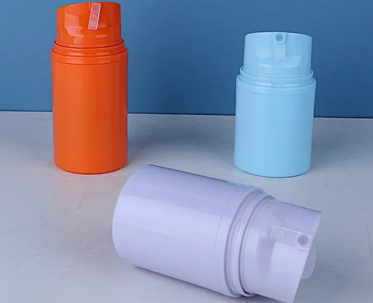
Quality Control for Airless Bottle Packaging
Quality control is essential when manufacturing airless bottle packaging for Cosmetic Products. Inspection should cover both individual components and the complete finished packaging system.
Common checks can include dimensional inspection, appearance inspection, capacity verification, pump dosage testing, leakage testing, assembly inspection, and dispensing tests. Customized packaging may also require color and surface-finish inspection.
For creams, serums, and lotions, formula compatibility testing should be performed with the actual product. The finished airless bottle packaging should be evaluated over an appropriate test period rather than being judged only by its appearance.
Repeated dispensing tests can help identify potential pump problems. Testing should confirm that the airless bottle continues to dispense the formula smoothly after multiple uses.
Advantages of Airless Bottle Packaging for Skincare
Airless bottle packaging offers several practical advantages for skincare brands. Controlled dispensing can make daily application more convenient. The pump system can reduce direct contact with the formula, while the enclosed structure provides a clean packaging experience.
Airless bottle packaging also provides design flexibility. Brands can select different capacities, materials, colors, shapes, and surface treatments. This makes the packaging suitable for different product categories and market positioning.
Another benefit is dispensing consistency. When the pump is correctly matched with the formula, users can receive a predictable amount of cream, serum, or lotion with each application.
For brands developing a complete skincare collection, airless bottle packaging can also create visual consistency across different products. Different bottle sizes and decorations can be developed while maintaining a recognizable packaging structure.
Airless Bottle Packaging for OEM and ODM Projects
OEM and ODM projects often require customized airless bottle packaging rather than standard containers. Brands may provide drawings, samples, product concepts, capacity requirements, or specific decoration instructions.
An experienced manufacturer can support the development process from mold design and sampling to injection molding, component assembly, decoration, inspection, and mass production. This integrated process can reduce communication problems between different suppliers.
Yuyao Dingyu Plastic Industry Co., Ltd. provides cosmetic packaging manufacturing services in Yuyao, Ningbo, Zhejiang, China. The company operates its own manufacturing factory and has mold development workshops, injection molding machines, and testing equipment.
For customized airless bottle packaging, the company can support new mold development, color matching, silk-screen printing, hot stamping, electroplating, frosting, pump matching, sample evaluation, and mass production. This provides cosmetic brands with a practical path from packaging concept to finished product.
How to Choose the Right Airless Bottle Packaging
When selecting airless bottle packaging for creams, serums, and lotions, start with the formula rather than the appearance. Determine the viscosity, application amount, expected usage frequency, and compatibility requirements of the product.
Next, choose the appropriate capacity and pump dosage. Consider whether the product is intended for daily facial care, body care, travel use, trial use, or another application. The packaging dimensions should also fit the intended carton, label, and transportation system.
After that, evaluate material and appearance. Select the bottle material, color, shape, cap, and surface finish according to the product's positioning and practical requirements.
Finally, request samples and test the actual formula. Evaluate filling, pump activation, dispensing, leakage, compatibility, appearance, and transportation performance before moving to mass production.
Common Mistakes When Selecting Airless Bottle Packaging
One common mistake is selecting airless bottle packaging based only on appearance. A beautiful bottle may not provide suitable dispensing performance for a particular cream, serum, or lotion.
Another mistake is ignoring formula viscosity. The pump must be suitable for the actual product. Testing with water or another substitute does not necessarily represent the behavior of the finished cosmetic formula.
Choosing the wrong capacity can also create problems. Packaging that is too large may be inconvenient for some products, while packaging that is too small may not provide enough product for the intended usage cycle.
Finally, some brands move directly into mass production without sufficient sample testing. Airless bottle packaging should be tested with the actual formula and intended production process before a large order is confirmed.
Airless Bottle Packaging for Different Skincare Applications
Airless bottle packaging can be adapted to many skincare applications. Facial creams can use medium-capacity packaging with controlled pump dosage. Serums may use compact airless bottles with smaller dispensing quantities. Lotions can use larger capacities and pump systems designed for frequent application.
Moisturizers, eye-care products, anti-aging products, gels, sunscreens, and other cosmetic formulations may also use airless bottle packaging when the formula and pump are compatible.
The most suitable packaging depends on the complete product system. There is no single airless bottle that is ideal for every cream, serum, or lotion. Product requirements should always guide the final selection.
Final Thoughts on Airless Bottle Packaging
Airless bottle packaging is a practical solution for creams, serums, and lotions because it combines controlled dispensing, convenient application, flexible capacity options, and customizable appearance. However, selecting the right airless bottle requires careful consideration of formula compatibility, pump dosage, material, capacity, filling method, and quality control.
For cosmetic brands, the best results come from testing the actual formula with the actual airless bottle before mass production. This allows potential problems with viscosity, dispensing, leakage, assembly, and decoration to be identified early.
With suitable design and professional manufacturing support, airless bottle packaging can provide a reliable and attractive solution for modern skincare products. Whether the application involves creams, serums, lotions, or other cosmetic formulas, the right packaging should support product performance while creating a convenient and consistent consumer experience.
SEO Description
Airless bottle packaging for creams, serums, and lotions provides controlled dispensing, convenient application, customizable capacity, and modern cosmetic presentation. Learn about airless bottle materials, pump dosage, formula compatibility, filling, customization, quality testing, OEM production, and practical selection tips for developing reliable skincare packaging solutions.



 WhatsApp
 Phone
Phone E-mail
 Message
Comment
(0)