
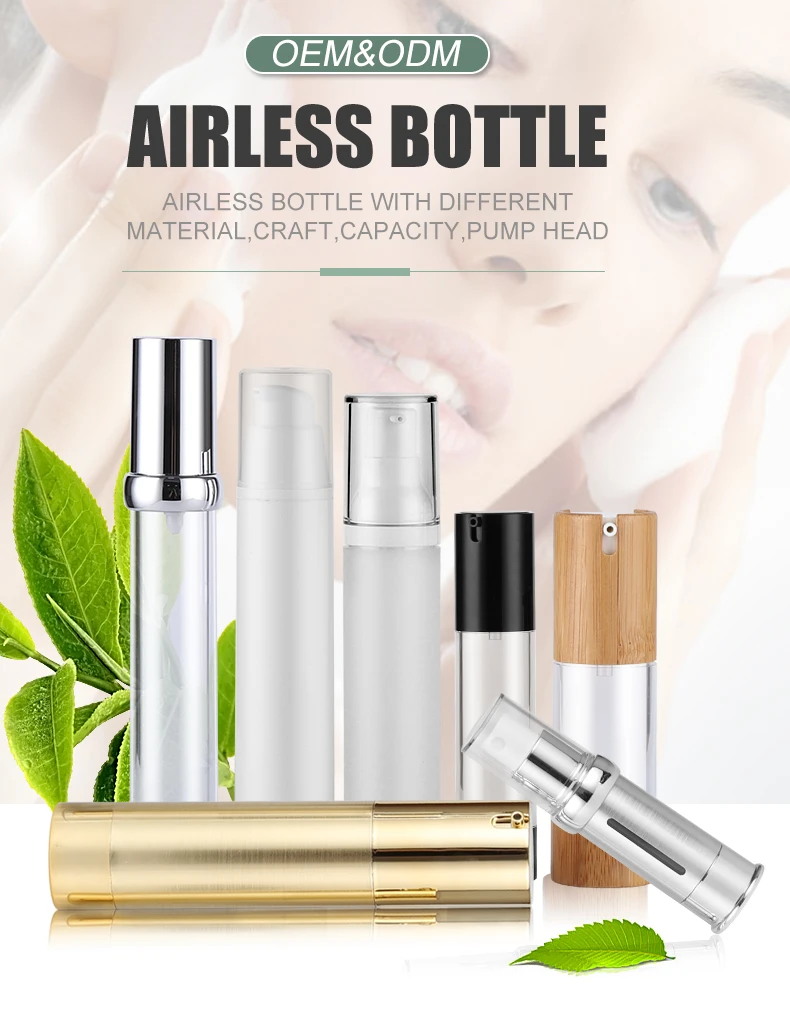









Black Frosted Cylinder PP AS Airless Pump Bottle
When I work on Cosmetic Packaging projects, I usually start with a simple question: what does the product need from its bottle? A good package has to look right, feel comfortable in the hand, dispense the formula properly, and fit the brand's production and shipping requirements. The bottle should also be practical enough for daily use.
Our Black Frosted Cylinder PP AS Airless Pump Bottle is designed with these points in mind. It combines a black frosted appearance, cylinder-shaped body, PP and AS material components, and an airless pump dispensing structure. This makes it a practical option for skincare, creams, lotions, serums, emulsions, and other suitable personal care products.
From my experience in cosmetic packaging manufacturing, I know that appearance alone cannot decide whether a bottle is suitable. A customer may like the black frosted surface, but we still need to check the formula, pump performance, filling requirements, dimensions, decoration, and production quantity. That is why we encourage customers to evaluate samples before moving into mass production.
At Yuyao Dingyu Plastic Industry Co., Ltd., we manufacture cosmetic packaging in our own factory in Yuyao, Ningbo, Zhejiang Province. Our plant covers about 5,000 square meters and includes mold development workshops, injection-molding machines, and testing instruments. We provide OEM and ODM services based on customer drawings or samples, covering development, decoration, sampling, production, inspection, packing, and delivery.

A Black Frosted Cylinder PP AS Airless Pump Bottle is a plastic cosmetic container built around a cylindrical body and pump dispensing system. The black frosted surface gives the package a soft, less reflective appearance, while the cylinder shape keeps the overall design simple and easy to work with for many cosmetic product styles.
The product uses PP and AS material components according to the packaging construction. PP stands for polypropylene, a common plastic material used in many packaging applications. AS refers to acrylonitrile styrene, which is also used in plastic packaging components. The exact material distribution depends on the specific bottle construction and component design.
I prefer to explain this clearly because material names can easily be misunderstood in cosmetic packaging. A bottle containing PP and AS components should not automatically be described as having the same properties as a bottle made entirely from one material. For each project, we confirm the actual component structure and application requirements.
The airless pump is another important part of the design. Instead of relying on a simple open container, an airless package generally uses an internal moving structure to help push the product toward the dispensing outlet. Depending on the design, this may involve a piston or another internal mechanism.
The main purpose is controlled dispensing. When the user presses the pump, the product is delivered through the outlet. The exact amount delivered per press depends on the pump design, formula viscosity, internal structure, and other factors.
| Feature | What It Means | Why I Check It |
|---|---|---|
| Black color | Dark external appearance | Matches the brand's visual design |
| Frosted finish | Less glossy surface appearance | Creates a different visual and hand-feel effect |
| Cylinder shape | Round vertical bottle body | Provides a simple and familiar package format |
| PP and AS components | Plastic material combination | Needs to match the package structure and application |
| Airless pump | Pump-based dispensing structure | Needs to match formula viscosity and dosage requirements |
Source: Product characteristics in this table are based on the supplied product specifications. Final material composition and pump construction should be confirmed against the approved product drawing and sample.
For me, the biggest advantage of this type of packaging is that the different elements work together. The black frosted cylinder body gives the bottle its visual identity, while the pump structure focuses on practical product dispensing.
The basic idea behind an airless pump bottle is easy to understand. The cosmetic formula is filled into the bottle, the pump is assembled, and the user presses the actuator when product is needed. Inside the package, a moving component helps bring the formula toward the dispensing area.
In a traditional bottle, air may enter the container as product leaves. In an airless design, the internal structure is intended to move with the decreasing product volume. This can help limit direct outside air contact during dispensing, depending on the exact design.
However, I would not describe an airless pump bottle as a guarantee of longer product shelf life. That would be too broad. Formula stability depends on many factors, including ingredients, preservatives, filling conditions, packaging compatibility, storage temperature, and the actual package design.
What I can say is that airless dispensing is useful when a brand wants a controlled way to deliver a formula while using a package structure designed to reduce direct air contact during normal dispensing.
When the actuator is pressed, the pump mechanism creates the movement needed to push the formula toward the outlet. The exact internal process depends on the selected pump.
For this reason, I always recommend testing the actual cream, lotion, serum, or emulsion with the actual pump. A thin lotion and a thick cream do not behave in the same way. A pump that works well with one formula may need adjustment for another.
Aptar's published Airless Packaging information describes different airless structures, including piston and bag-in-bottle systems, and explains that airless packaging can be developed for different formula and dispensing needs.
Source: Aptar Beauty, Airless Packaging technical information. The specific working structure varies according to the selected package. Source: Aptar Airless Packaging
| Formula Type | Packaging Point to Check | Recommended Evaluation |
|---|---|---|
| Light lotion | Flow and pump dosage | Repeated dispensing test |
| Serum | Liquid flow and outlet control | Dispensing consistency test |
| Emulsion | Viscosity and pump compatibility | Formula-package compatibility test |
| Thick cream | Product movement and pump force | Multiple-cycle dispensing test |
Source: Practical packaging evaluation guidance based on the supplied product application information and general airless dispensing principles. Actual suitability must be confirmed with the customer's formula and selected pump.
The black frosted surface is one of the first things people notice. Compared with a highly glossy surface, frosting creates a softer visual effect. It can also make the bottle look less reflective under strong lighting.
For Cosmetic Brands, this gives designers another option when building a product identity. A black bottle can be used with simple white printing, metallic decoration, colored logos, or other artwork depending on the final design.
I recommend approving a physical color sample before mass production. Digital images are useful for early design work, but they cannot completely replace a real packaging sample. Lighting, screen settings, surface texture, and printing can all change how a color appears.
The cylinder shape is straightforward and familiar. It gives the package a balanced appearance and can provide a useful surface area for branding and product information.
It is also easy to combine with different visual styles. A brand may choose a simple black-and-white logo, a metallic effect, or a more colorful design. The final decoration depends on the artwork and the available surface treatment.
The airless pump gives the package a controlled dispensing method. This is useful for Skincare Products where users want to press the pump rather than open a wide container.
The exact pump dosage should be confirmed before production. If a customer has a specific amount they want to dispense per press, we can discuss the matching pump configuration and carry out sample testing.
The product specification includes PP and AS material components. In cosmetic packaging, different components may use different plastic materials depending on their function, appearance, and construction.
Rather than treating the material name as the entire story, I look at how the complete package performs. The bottle, pump, closure, decorative layer, and formula need to work together.
We can discuss customized colors, silk-screen printing, hot stamping, electroplating, frosting, and other surface finishes. The available process depends on the bottle design, material, artwork, quantity, and required appearance.
When buyers search for a PP AS airless pump bottle or Black Frosted Airless Pump Bottle, they are often comparing several similar-looking products. I suggest looking beyond the product photo.
The real question is whether the packaging can fit the complete production process.
First, the bottle needs to hold the intended amount of formula. Second, the pump needs to work with the formula. Third, the decoration needs to meet the brand's appearance requirements. Fourth, the package needs to survive filling, assembly, packing, transportation, and normal customer use.
These points may sound simple, but they are exactly where packaging projects can become expensive if they are ignored at the beginning.
| Evaluation Area | What I Recommend Checking | Reason |
|---|---|---|
| Capacity | Actual filling volume and bottle dimensions | Prevents mismatch between bottle size and formula quantity |
| Pump | Dosage, actuation and formula flow | Supports consistent daily dispensing |
| Surface | Color, frosting and decoration | Controls final visual appearance |
| Assembly | Component fit and operation | Helps avoid problems during filling and use |
| Packaging | Inner protection and export cartons | Reduces transport-related packaging risks |
Source: Practical cosmetic packaging checklist prepared from the supplied manufacturing and product specifications. Final inspection criteria should be agreed with the customer according to the project.
This is worth saying clearly because I see the misunderstanding quite often. An Airless Bottle can help control dispensing and reduce direct air exposure during use, but the package cannot replace formula stability testing.
If a skincare formula is sensitive to oxygen, light, heat, or interaction with packaging materials, the complete system should be tested. The correct approach is to test the real formula inside the real package under the expected storage conditions.
This is also why I prefer sample approval before mass production. It gives the customer a chance to check the complete packaging system before a large quantity is made.
The product is suitable for many cosmetic and personal care applications where a pump dispensing package is appropriate.
Face cream is one of the most natural applications. The pump format provides a simple way to dispense the product, while the black frosted appearance can support different skincare brand styles.
For a facial cream, I recommend checking the formula viscosity and desired dosage carefully. Some creams are easy to dispense, while thicker formulas may require a different pump configuration.
Serums can vary greatly in thickness. Some are almost water-like, while others have a much heavier texture. The bottle can be considered for serum packaging when the pump and formula are compatible.
Lotions and emulsions are also possible applications. The final pump should be selected according to the actual product flow and dosage requirement.
Beyond facial skincare, the bottle can also be considered for selected personal care products. The final application should always be checked against the formula and package specifications.
For private-label brands, the black frosted finish provides a ready starting point for a strong visual identity. A simple logo, product name, color detail, or metallic decoration can be added depending on the design.
OEM buyers may already have a formula and brand artwork but need a manufacturer to produce the packaging. In that case, our job is to help connect the packaging structure with the customer's requirements.
We can work from drawings or samples and discuss mold development, color matching, printing, surface finishing, pump options, sampling, production, inspection, and export delivery.

Our manufacturing process is built around practical control. We do not simply receive an order and start making bottles. For customized projects, I prefer to make sure the important details are clear before production begins.
We first review the customer's drawing, sample, target capacity, material requirements, pump type, color, surface finish, logo, quantity, and intended application.
If the customer has a physical sample, we can use it as a reference for discussing dimensions and appearance.
Our factory has an in-house mold development workshop. For a standard bottle, we can work according to the existing product structure. For a new custom design, mold development may be required.
The actual mold schedule depends on the design complexity, modification requirements, testing, and customer approval.
Plastic components are produced using injection-molding machines. During production, we pay attention to dimensions, appearance, and consistency.
For a frosted black bottle, surface appearance is especially important because the final visual effect depends on both the molded surface and the finishing process.
Color matching is handled according to the customer's requirements. Frosting can be used to create the specified surface appearance.
I always suggest sample approval before bulk production. A physical sample gives the customer a much clearer idea of what the final bottle will look like.
Depending on the project, we can discuss silk-screen printing, hot stamping, electroplating, frosting, and other surface finishes.
The best method depends on the artwork, bottle structure, quantity, and target appearance. We do not assume that one decoration process is suitable for every design.
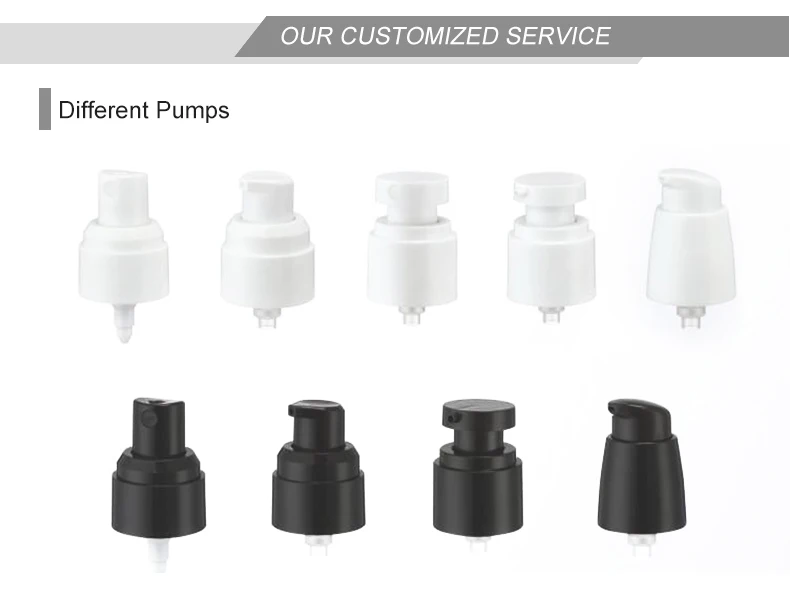
The pump needs to fit the bottle correctly and work with the selected formula. During evaluation, we can check dispensing behavior, assembly, and overall operation.
If the customer's formula is available, testing the actual formula is the most useful way to evaluate the package.
Before mass production, samples can be provided for evaluation. This allows the buyer to check the color, frosting, logo, dimensions, pump function, assembly, and general appearance.
After approval, we move into mass production. Before delivery, the products are checked for appearance, dimensions, dispensing or pump function, and packaging condition.
Our standard packing can include polybags, inner boxes, and export cartons. If extra protection is required, pallets or wooden cases can be discussed.
For standard PP Airless Bottle orders, the typical production cycle is around 15–30 days after sample approval and order confirmation. Custom colors, special finishes, or new mold development may require additional time.
I know that “factory” is not enough information for a buyer. What matters is whether the supplier can actually support the project from the first sample to final delivery.
Yuyao Dingyu Plastic Industry Co., Ltd. was founded in 2014 and operates its own manufacturing factory in Yuyao, Ningbo, Zhejiang Province. Our facility covers about 5,000 square meters and includes mold development workshops, injection-molding machines, and testing instruments.
Our flagship product category is Airless Cosmetic Bottles. We also manufacture lotion bottles, perfume bottles, PET bottles, and other beauty packaging products. This product range allows us to work with customers who need more than one packaging format.
We accept OEM and ODM projects based on customer drawings or samples. If the customer needs a new bottle design, we can discuss mold development. If the bottle already exists but needs a different appearance, we can discuss color matching and surface decoration.
Our service covers sample testing, prototype development, mold development, color matching, printing, hot stamping, electroplating, frosting, pump selection, mass production, inspection, packing, and delivery.
This is useful for buyers who do not want to coordinate every small packaging component with several different suppliers.
We can provide samples for evaluation. I consider this one of the most useful steps in the whole process because it reduces the chance of discovering an appearance or function problem after bulk production.
Quality control runs through the production process. Before delivery, we check appearance, dimensions, dispensing or pump function, and packaging condition. For customized projects, the inspection focus can be adjusted according to the approved sample and customer requirements.
Our products are exported to North America, South America, Europe, Southeast Asia, the Middle East, Australia, and other regions. We have self-operated import and export rights and established foreign-trade workflows.
We normally reply to customer inquiries within 24 hours and aim to provide tailored solutions within one week. The exact schedule depends on the project, but we try to make the next step clear instead of leaving buyers waiting without information.
Our general payment arrangement is 30% deposit and 70% balance before shipment, subject to the specific agreement.
For packaging, we can use protective polybags, inner boxes, and export cartons. Pallets or wooden cases can be arranged when required.
Shipping options include sea freight, air freight, and express delivery. The right choice depends on order quantity, destination, urgency, and the customer's logistics plan.
It is a cosmetic packaging bottle featuring a black frosted cylinder-shaped body, PP and AS material components, and an airless pump dispensing structure. It can be considered for skincare, creams, lotions, serums, emulsions, and other suitable personal care formulas.
The bottle can be considered for creams, lotions, serums, emulsions, face care products, and other beauty formulations. The actual suitability depends on formula viscosity, ingredients, filling requirements, pump dosage, and package compatibility.
The exact finish depends on the product configuration and order requirements. We can discuss black color, frosting, and other surface finishes during the customization process. A physical sample should be approved before mass production.
Yes. We provide color matching services. Customers can provide a color reference, sample, or design requirement, and we can discuss the appropriate production method.
Yes. Depending on the design, we can discuss silk-screen printing, hot stamping, electroplating, frosting, and other surface decoration options.
Yes. We offer a range of matching pump heads. The final pump should be selected according to the bottle structure, formula viscosity, desired dosage, and dispensing performance.
It may be possible, but I recommend testing the actual cream with the selected pump. Thick formulas can behave differently from lotions or serums, so pump force, dosage, product flow, and repeated dispensing should be checked before mass production.
No. An airless structure is designed to help control dispensing and can reduce direct outside air exposure during use depending on the design. It does not guarantee complete protection from oxidation or automatically extend product shelf life. Formula and packaging compatibility testing is still necessary.
Yes. We have an in-house mold development workshop and provide OEM and ODM services. New mold development is evaluated according to the drawing, sample, structure, quantity, and required finish.
For standard PP Airless Bottles, the typical production cycle is around 15–30 days after sample approval and order confirmation. Custom colors, special finishes, and new mold development may require additional time.
Before delivery, we check appearance, dimensions, dispensing or pump function, and packaging condition. For customized orders, the final inspection can also refer to the approved sample and agreed customer requirements.
Our general payment term is 30% deposit and 70% balance before shipment, subject to the specific order agreement.
We can use protective polybags, inner boxes, and export cartons. Pallets or wooden cases can also be discussed when additional protection is needed.
Yes. We support sea freight, air freight, and express delivery. The shipping method depends on the order quantity, destination, delivery schedule, and customer requirements.
Yes. We can provide samples for customer evaluation before mass production. I recommend checking the real bottle, color, frosting, logo, pump operation, dimensions, and formula compatibility before approving a large order.
For me, the value of a cosmetic package comes from the complete combination of appearance, function, production, and service. A black frosted surface can give a bottle a clean visual direction. The cylinder shape provides a familiar package format. PP and AS components form part of the package construction, while the airless pump provides controlled product dispensing.
But the right packaging decision should always go one step further. I recommend checking the actual formula, viscosity, dosage, filling volume, pump function, decoration, assembly, shipping requirements, and target market before mass production.
At Yuyao Dingyu Plastic Industry Co., Ltd., we support customers through this process with our own manufacturing factory, mold development capability, injection-molding equipment, testing instruments, OEM and ODM services, sample evaluation, customized decoration, quality control, export packing, and international delivery.
If you are looking for a black frosted airless pump bottle, PP AS airless pump bottle, black cylinder Cosmetic Bottle, or Custom Airless cosmetic packaging, you can start by sending us your target capacity, formula type, pump requirement, artwork, quantity, and preferred surface finish. From there, we can work through the packaging details step by step and prepare a suitable sample for evaluation.
Technical and reference sources: Product specifications and manufacturing information are based on the supplied Yuyao Dingyu product and company information. General airless packaging principles are referenced from Aptar Beauty. Cosmetic packaging and production guidance may also be reviewed against ISO 22715:2006 and ISO 22716:2007. Actual package performance should always be confirmed through product-specific testing.

dy1@dingyu-plastic.com
Contact Person:Mr. Fu
Mobile Number:+86 13736020285
Email:dy1@dingyu-plastic.com
Business Address:No.59 Dongheng Road, Mazhu Town, Yuyao City, Zhejiang Province, China

This website uses cookies to ensure you get the best experience on our website.

 Español
 Français
 Deutsch
 한국어
한국어


 WhatsApp
 Phone
Phone E-mail
 Message