
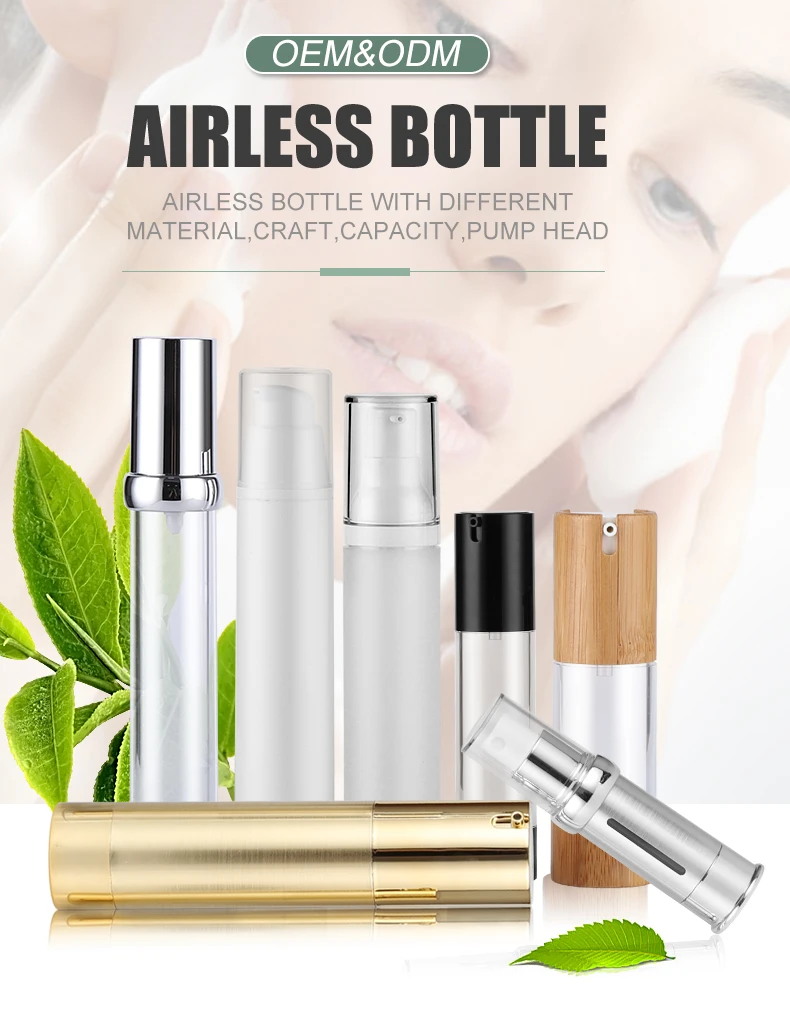

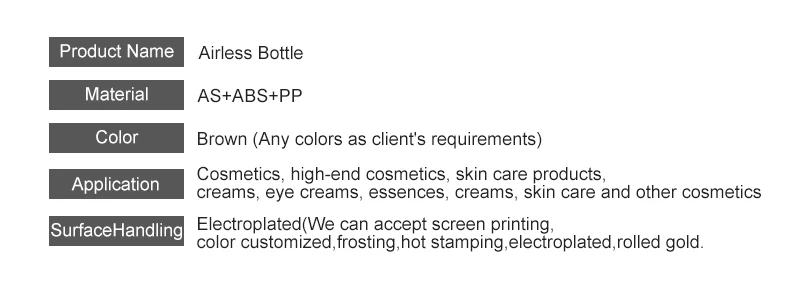

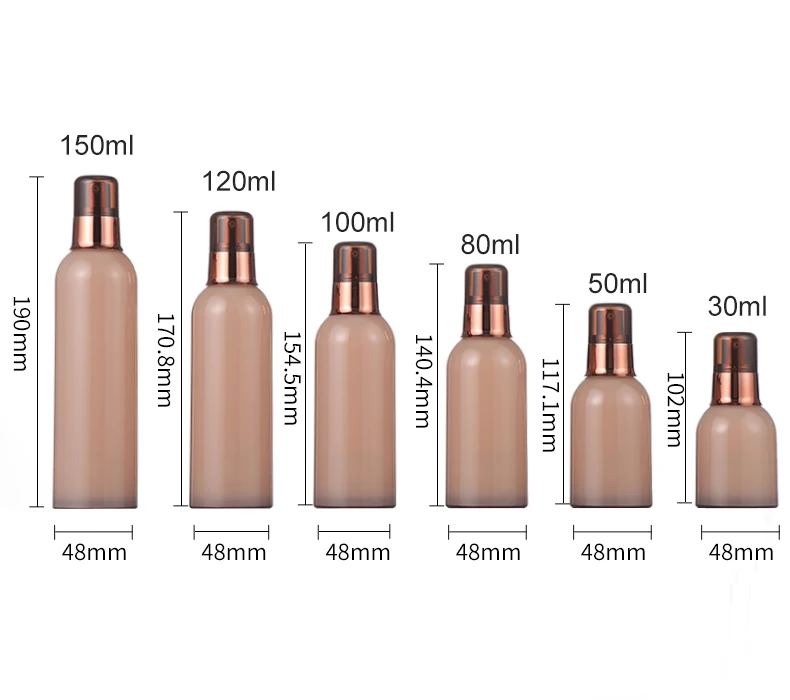

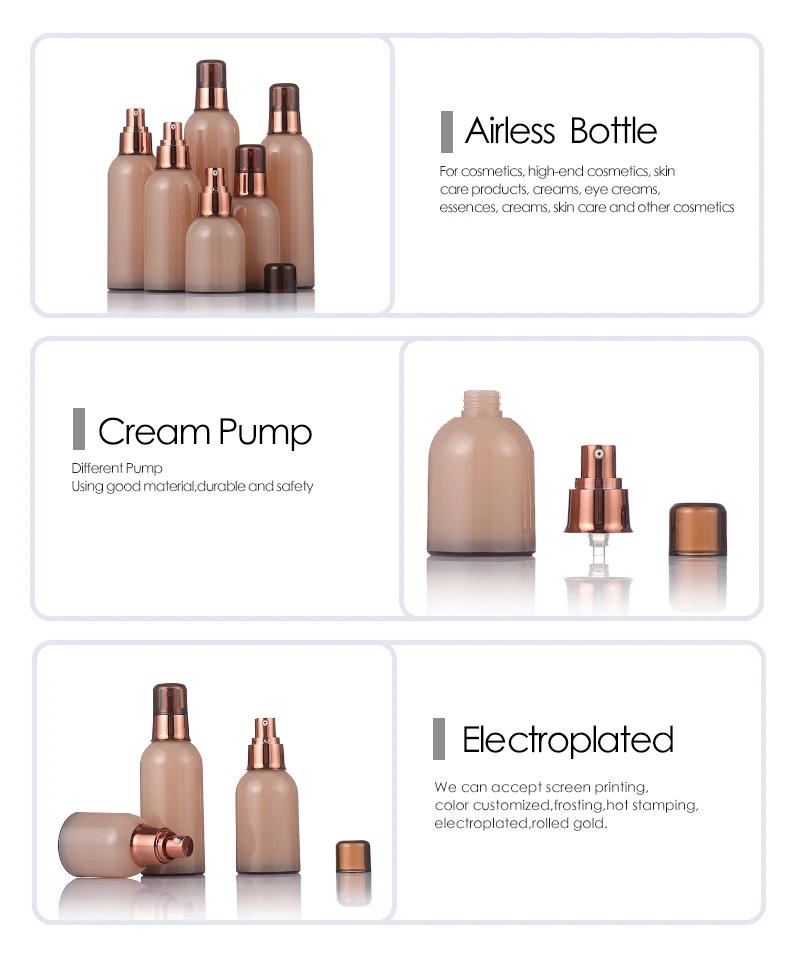



Luxury Cream Bottle 30ml 50ml 80ml 100ml 120ml 150ml
When I work with Cosmetic Brands on packaging, I often find that choosing a cream bottle is not as simple as picking a nice-looking container. The bottle needs to match the product volume, formula, Pump, filling process, transportation requirements, and the visual style of the brand. If one part does not fit, the problems usually show up later during filling, assembly, shipping, or daily use.
Our Luxury Cream Bottle range is designed around this practical idea. We provide 30ml, 50ml, 80ml, 100ml, 120ml, and 150ml options so buyers can select a capacity according to the product rather than forcing every formula into the same bottle size. These sizes can be considered for face cream, body cream, lotion, moisturizer, Skincare Products, and other beauty formulations where a pump bottle format makes sense.
At Yuyao Dingyu Plastic Industry Co., Ltd., we manufacture Cosmetic Packaging in our own factory in Yuyao, Ningbo, Zhejiang Province. Our facility covers about 5,000 square meters and includes mold development workshops, injection-molding machines, and testing equipment. We also provide OEM and ODM services, so customers can work with us from an initial drawing or sample through mold development, color matching, decoration, sampling, production, inspection, and delivery.
In this page, I will explain how I look at this type of cream bottle, how the dispensing structure works, what the different capacities are useful for, how we handle customization, and what buyers should check before placing a bulk order.

A Luxury Cream Bottle is a cosmetic packaging container designed to hold and dispense cream, lotion, moisturizer, serum, or other suitable skincare formulas. The word “luxury” here mainly describes the appearance and presentation of the packaging. It should not be treated as a technical claim about the formula or the performance of the container.
For a cosmetic brand, the bottle is part of the product experience. Customers see the packaging before they use the cream. They hold it, open it, press the pump, and place it on a bathroom shelf or dressing table. Because of this, details such as bottle shape, surface finish, pump feel, color, logo decoration, and capacity can all influence how the finished product is presented.
Our available capacities include 30ml, 50ml, 80ml, 100ml, 120ml, and 150ml. The smaller sizes can be useful for facial skincare products, travel-oriented products, samples, or compact product lines. Medium capacities are commonly considered for daily-use creams and lotions, while larger sizes can be useful for body care or products intended for longer-term use.
| Capacity | Common Packaging Direction | Typical Product Consideration | Buyer Check |
|---|---|---|---|
| 30ml | Compact skincare packaging | Face cream, treatment cream, selected serums | Formula volume, pump dosage, product positioning |
| 50ml | Daily skincare packaging | Face cream, moisturizer, skincare products | Daily use frequency and dosage |
| 80ml | Medium-capacity packaging | Skin and personal care products | Formula consumption rate |
| 100ml | Regular larger-size packaging | Lotion, cream, body care products | Filling volume and transport requirements |
| 120ml | Large-capacity packaging | Body care and larger skincare formats | Product positioning and bottle dimensions |
| 150ml | Large daily-use packaging | Body cream, lotion and personal care products | Dispensing amount and package weight |
Source: Capacity selection above is a practical packaging comparison prepared for this product range. Final capacity, fill volume, pump dosage, and bottle dimensions should be confirmed against the actual drawing and sample.
One point I always recommend checking is the difference between the nominal Bottle Capacity and the actual filling requirement. A bottle marked 50ml, for example, should not automatically be treated as suitable for every 50ml formula. Formula density, filling equipment, headspace, pump construction, and filling tolerance all need to be considered during product development.
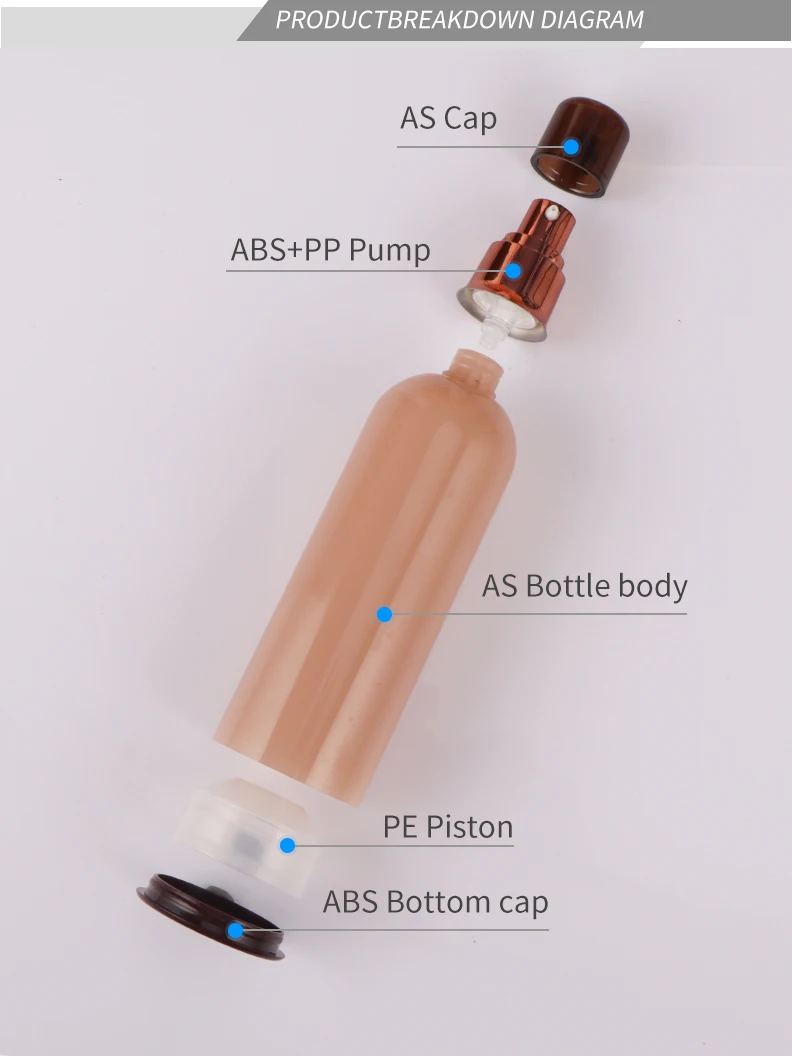
The basic working process is straightforward. The cosmetic formula is filled into the bottle, the pump system is assembled, and the consumer presses the actuator to dispense the product. Depending on the pump design, the internal structure can use components that move the product toward the dispensing outlet as the package is used.
This is one reason pump packaging is convenient for creams and lotions. Instead of opening a wide container and taking product out by hand, the user can press the pump and receive a controlled amount. The actual dosage depends on the pump design, actuator, formula viscosity, and other construction details.
Airless technology is another important concept in cosmetic packaging. In an airless system, an internal piston or another moving structure can push the formula upward as dispensing takes place. This is different from a basic bottle where air enters the container as product leaves.
Industry packaging suppliers such as Aptar describe airless systems as using piston or bag-in-bottle structures to move formula toward the dispensing area. Their published information also shows that Airless Packaging can be developed for different viscosity ranges and dispensing requirements. However, the exact structure varies between packaging designs, so I do not recommend assuming that every pump bottle works in exactly the same way.
For our own projects, I prefer to test the actual bottle with the customer's formula instead of making a general promise based only on the packaging name. A cream can be thick, soft, waxy, gel-like, or highly fluid. The same pump may behave differently with different formulas.
| Packaging Factor | Why It Matters | What We Check |
|---|---|---|
| Formula viscosity | Changes the way the product moves through the pump | Dispensing performance with the actual formula |
| Pump dosage | Affects how much product comes out per press | Actuation and dosage consistency |
| Bottle capacity | Determines the amount of product the package can hold | Dimensions and filling requirement |
| Closure and assembly | Influences package integrity and user experience | Assembly fit and functional operation |
| Decoration | Changes the external appearance | Color, printing, finish and sample approval |
Source: General airless dispensing principles are referenced from Aptar Beauty's published airless packaging information. Actual performance depends on the selected packaging structure and formula.
When I discuss packaging with a customer, I normally divide the product into several practical areas rather than talking only about appearance.
The 30ml, 50ml, 80ml, 100ml, 120ml, and 150ml range gives brands more room when building a product family. A company may use a smaller bottle for a concentrated facial cream and a larger bottle for body care. Keeping the visual style consistent across different capacities can also help a brand create a recognizable packaging family.
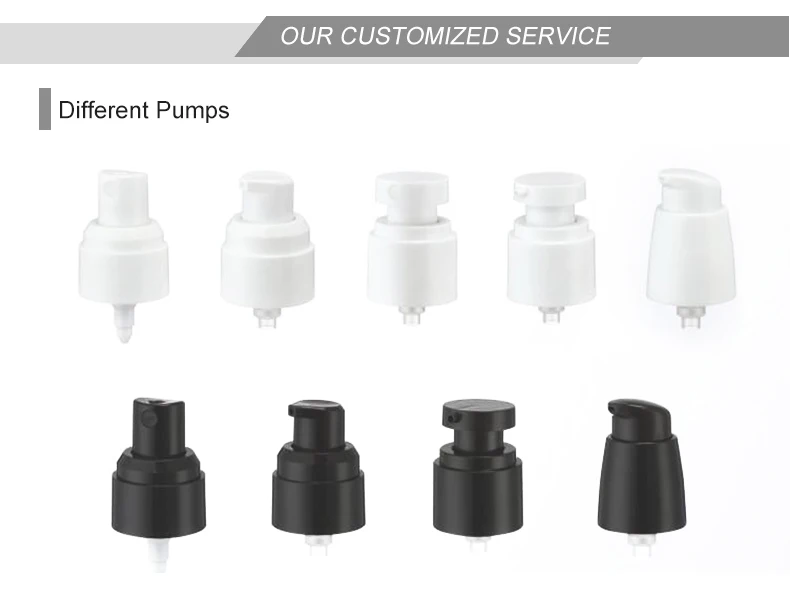
A pump provides a simple way to dispense the formula. It can be more convenient for users who do not want to open a jar every time they apply a cream. The actual pump type should be selected according to the formula, desired dosage, bottle neck, and filling requirements.
For a luxury-looking cosmetic package, surface appearance matters. We can discuss color matching, silk-screen printing, hot stamping, electroplating, frosting, and other finishing requirements according to the customer's design.
I usually recommend starting with a physical sample rather than approving decoration only from a digital picture. A color shown on a monitor can look different from the actual molded plastic surface. The same is true for metallic effects, frosting, and printed logos.
The bottle format can be considered for face creams, moisturizing creams, lotions, body care, personal care, skincare products, and selected beauty formulations. It is important to test the actual formula before mass production, especially when the product has unusual viscosity, sensitive ingredients, or special dispensing requirements.
We do not limit our service to supplying a standard bottle. Customers can send us drawings, samples, reference packaging, color requirements, or decoration ideas. We can then discuss mold development, pump matching, color, printing, surface treatment, sampling, and mass production.
There is a simple mistake I see quite often in cosmetic packaging projects: the buyer chooses a bottle because the shape looks good, then asks whether it can work with the formula. I prefer to reverse the process.
First, we look at the formula and target fill volume. Then we consider the dispensing method, pump dosage, bottle dimensions, material, decoration, filling line, shipping method, and final market requirements.
For example, a 30ml cream bottle intended for a concentrated facial formula may have very different requirements from a 150ml bottle intended for body lotion. The capacity is only one part of the decision.
| Selection Item | 30ml–50ml Direction | 80ml–100ml Direction | 120ml–150ml Direction |
|---|---|---|---|
| Product positioning | Compact skincare | Daily skincare and personal care | Larger daily-use products |
| Typical use environment | Home, travel, skincare routines | Home and daily personal care | Home, bathroom and body care |
| Important consideration | Compact size and dosage | Balance between volume and handling | Package size, weight and logistics |
| Decoration space | More limited | Moderate | Generally more surface area |
Source: This table is a practical packaging selection guide based on the listed capacities, not a universal industry standard. Final application depends on the actual product formula and package design.
Airless packaging can offer another technical advantage when the formula requires reduced exposure to outside air during dispensing. According to Aptar, airless systems can use piston or bag-in-bottle structures to push product toward the outlet and can be designed for controlled dispensing and high product evacuation. Still, I would never tell a customer that “airless” automatically guarantees a longer shelf life. Formula stability depends on the formulation, filling process, package compatibility, storage conditions, and regulatory requirements.
That distinction is important. Good packaging supports the formula. It does not replace formula testing.
For cosmetic packaging projects, I also recommend checking applicable packaging and labeling requirements for the destination market. ISO 22715:2006 specifically addresses packaging and labeling of Cosmetic Products, while ISO 22716:2007 provides guidelines covering production, control, storage, and shipment of cosmetic products. These documents are useful references, but the final legal requirements depend on the market where the finished cosmetic is sold.
Sources: ISO 22715:2006 and ISO 22716:2007.
I would not restrict this bottle range to one type of skincare product. The more useful way to look at it is to match the package to the formula and the intended user experience.
30ml and 50ml formats are practical starting points for facial creams, moisturizing products, treatment creams, and other compact skincare products. For these products, the pump, dosage, formula viscosity, and filling volume should be checked together.
50ml, 80ml, 100ml, and larger capacities may be considered when a brand wants more product in one package. The final size should depend on how much product consumers are expected to use per application and how frequently they purchase the product.
For body cream and body lotion, larger capacities can make sense because the amount used per application may be higher than with a facial product. The 100ml, 120ml, and 150ml options provide additional capacity choices.
Private-label businesses often need several package sizes for different formulas. A consistent bottle style with multiple capacities can make it easier to build a complete product line without changing the overall visual language of the brand.
For OEM projects, the customer may already have a formula and brand design but needs a reliable packaging supplier. In this situation, I focus on the practical connection between bottle, pump, decoration, sample, production, and delivery.
Our company can provide samples for evaluation before mass production. This step is useful because it gives the buyer an opportunity to check the appearance, dimensions, assembly, pump operation, decoration, and formula compatibility before committing to a larger order.
Our manufacturing process starts with the packaging requirement, not simply with the production machine. When a customer sends a drawing or physical sample, we first review the required dimensions, material, capacity, structure, color, pump, decoration, and expected quantity.
We confirm the product size, bottle style, pump requirements, color, decoration, application, and order quantity. If the customer already has a drawing or sample, we use it as the starting reference.
For customized packaging, mold development may be required. Our factory has an in-house mold development workshop, allowing us to work more directly on customized projects. New mold development normally needs to be evaluated separately because the timing depends on the complexity of the design and the approval process.
Plastic components are produced using injection-molding equipment. During this stage, process conditions need to be controlled so that the molded parts meet the required dimensions and appearance.
For a cosmetic brand, color is often a key part of the packaging identity. We can work on customized color requirements and provide samples for approval before larger production.
Depending on the design, available options include silk-screen printing, hot stamping, electroplating, frosting, and other surface finishes. These processes are selected according to the visual effect required by the customer.
The pump is an important part of the complete package. We can provide matching pump head options and check the assembly with the bottle. If the customer has a specific dispensing requirement, formula testing should be carried out with the actual pump configuration.
I strongly recommend approving a physical sample before mass production. This is where the buyer can check the real color, surface, logo, pump operation, bottle dimensions, assembly, and overall appearance.
After approval, we move into mass production. Quality checks run through the production process, with attention to appearance, dimensions, pump function, assembly, and packaging condition.
Our normal export packing can include protective polybags, inner boxes, and strong export cartons. Pallets or wooden cases can also be discussed when required. Depending on order quantity, destination, and delivery schedule, we can arrange sea, air, or express transportation.
For standard orders, our production cycle is generally around 15–30 days after sample approval and order confirmation. Customized colors, special decoration, and new mold development may require additional time. We confirm the actual schedule with the customer before production.

I believe the biggest value of a packaging supplier is not simply the bottle itself. It is the ability to keep the project moving when the details become complicated.
Yuyao Dingyu Plastic Industry Co., Ltd. was founded in 2014 and operates its own manufacturing factory in Yuyao, Ningbo, Zhejiang Province. Our facility covers approximately 5,000 square meters and is equipped with mold development workshops, injection-molding machines, and testing instruments.
Our flagship product category is airless cosmetic packaging, but our product range also covers lotion bottles, perfume bottles, PET bottles, pumps, and other beauty packaging products. This gives us a broader understanding of how different cosmetic packaging components need to work together.
We support OEM and ODM projects based on customer drawings or samples. If a buyer needs a new mold, customized color, logo printing, hot stamping, electroplating, frosting, or a matching pump, we can discuss the requirements directly with the customer.
Another point I consider important is sampling. We can provide samples for customer evaluation before mass production. It is much easier to adjust a bottle, pump, color, or decoration at the sample stage than after thousands of pieces have already been produced.
Our products are exported to North America, South America, Europe, Southeast Asia, the Middle East, Australia, and other markets. We also have self-operated import and export rights and established foreign-trade workflows.
For inquiries, we aim to reply within 24 hours. For projects that require customization, we aim to provide a tailored solution within one week. The actual development schedule depends on the project requirements, but our goal is to give buyers a clear path from the first discussion to sample approval and mass delivery.
For payment, our common arrangement is 30% deposit and 70% balance before shipment, subject to the final order agreement. Packaging normally includes protective polybags, inner boxes, and export cartons. Shipping can be arranged by sea, air, or express according to quantity, destination, and urgency.
We are not trying to make every project follow exactly the same process. Cosmetic brands have different formulas, markets, designs, and order quantities. Our job is to understand those differences and build a packaging solution around the actual requirement.
Our listed capacity range includes 30ml, 50ml, 80ml, 100ml, 120ml, and 150ml. The suitable size depends on the formula, expected fill volume, pump dosage, product positioning, and package dimensions. We can confirm the specific configuration after reviewing the product requirement.
Yes, these capacity options can be considered for face cream and other skincare products, provided that the bottle and pump are compatible with the formula. For a new product, I recommend testing the actual formula with the selected packaging before mass production.
Yes. Larger capacities such as 100ml, 120ml, and 150ml may be considered for body lotion and body cream when the product volume and dispensing requirements match. The pump should be selected according to the formula viscosity and desired dosage.
Yes. We provide color-matching services for customized cosmetic packaging. A physical sample should be approved before mass production because the final appearance of plastic packaging can differ from digital color references.
Yes. Depending on the design, we can discuss silk-screen printing, hot stamping, electroplating, frosting, and other surface finishes. The final decoration method depends on the bottle material, shape, artwork, quantity, and desired appearance.
Yes. We have an in-house mold development workshop and provide OEM and ODM support. Customers can send drawings, samples, or packaging concepts for evaluation. New mold development requires a separate schedule and quotation based on the design.
Yes. We can arrange samples for customer evaluation before mass production. This is an important step for checking bottle appearance, dimensions, pump function, assembly, decoration, and formula compatibility.
For standard production, the general lead time is around 15–30 days after sample approval and order confirmation. Customized colors, special surface treatments, and new mold development may require additional time. We confirm the production schedule for each project before starting.
Our common payment arrangement is 30% deposit and 70% balance before shipment, subject to the final order agreement.
We normally use protective polybags, inner boxes, and strong export cartons. If the order requires additional protection, pallets or wooden cases can be discussed according to the shipping method and destination.
Yes. We can support sea, air, and express transportation. The suitable method depends on order quantity, destination, delivery schedule, and customer preference.
I normally recommend starting with the actual formula volume and expected consumer usage. Then we check the pump dosage, bottle dimensions, product positioning, filling process, shipping requirements, and target market. There is no single capacity that works for every cosmetic product.
No. Airless packaging is designed to control dispensing and, depending on its construction, reduce direct air exposure during use. However, shelf life and formula stability depend on the formulation, package compatibility, filling process, storage conditions, and other factors. Stability testing should be completed with the actual product and packaging.
Yes. Our services cover sample evaluation, prototype development, mold development, color matching, surface decoration, pump selection, mass production, inspection, packing, and delivery. Our aim is to provide one-stop cosmetic packaging support rather than only supplying an empty bottle.
When I choose a Cosmetic Bottle, I do not start by asking which bottle looks the most impressive. I start by asking what the product needs.
For the Luxury Cream Bottle range, 30ml, 50ml, 80ml, 100ml, 120ml, and 150ml provide different capacity choices for skincare, cream, lotion, body care, and personal care products. The right option depends on the formula, expected fill volume, dispensing dosage, user habits, packaging appearance, and logistics.
For buyers who need customized cosmetic packaging, we can support the project from drawings or samples through mold development, color matching, printing, hot stamping, electroplating, frosting, pump selection, sampling, mass production, inspection, packing, and international delivery.
If you are developing a new skincare product or looking for a supplier for an existing cosmetic line, I recommend starting with the formula, target capacity, pump requirement, artwork, and expected order quantity. Once these details are clear, it becomes much easier to select the right cream bottle and avoid unnecessary changes later.
Source references for technical background: ISO 22715:2006, Cosmetics — Packaging and labelling; ISO 22716:2007, Cosmetics — Good Manufacturing Practices; Aptar Beauty airless packaging technical information. Final packaging suitability should always be confirmed through actual sample and formula testing.

dy1@dingyu-plastic.com
Contact Person:Mr. Fu
Mobile Number:+86 13736020285
Email:dy1@dingyu-plastic.com
Business Address:No.59 Dongheng Road, Mazhu Town, Yuyao City, Zhejiang Province, China

This website uses cookies to ensure you get the best experience on our website.

 Español
 Français
 Deutsch
 한국어
한국어


 WhatsApp
 Phone
Phone E-mail
 Message