








Black PP Airless Pump Lotion Bottle
When I talk with Cosmetic Brands about packaging, I often find that the bottle is treated as a simple container. In actual production, it is not that simple. The bottle has to match the formula, dispensing method, brand design, filling process, transport conditions and final user experience. That is why I pay close attention to the structure of an Airless Bottle before recommending it for a project.
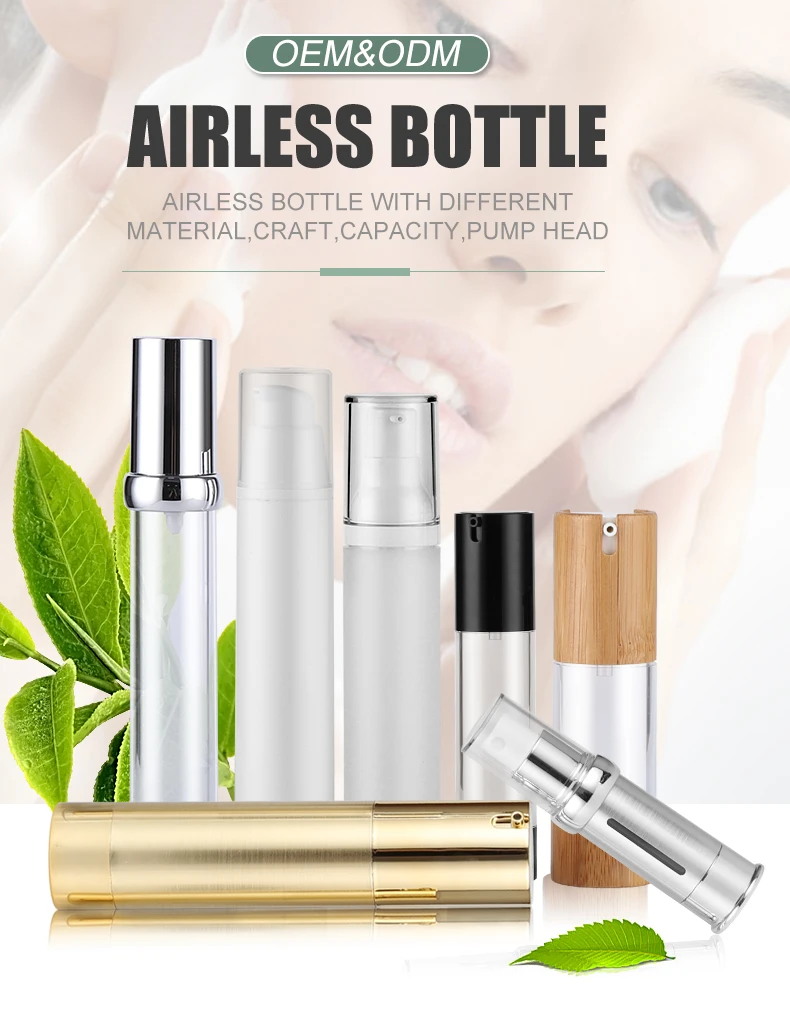
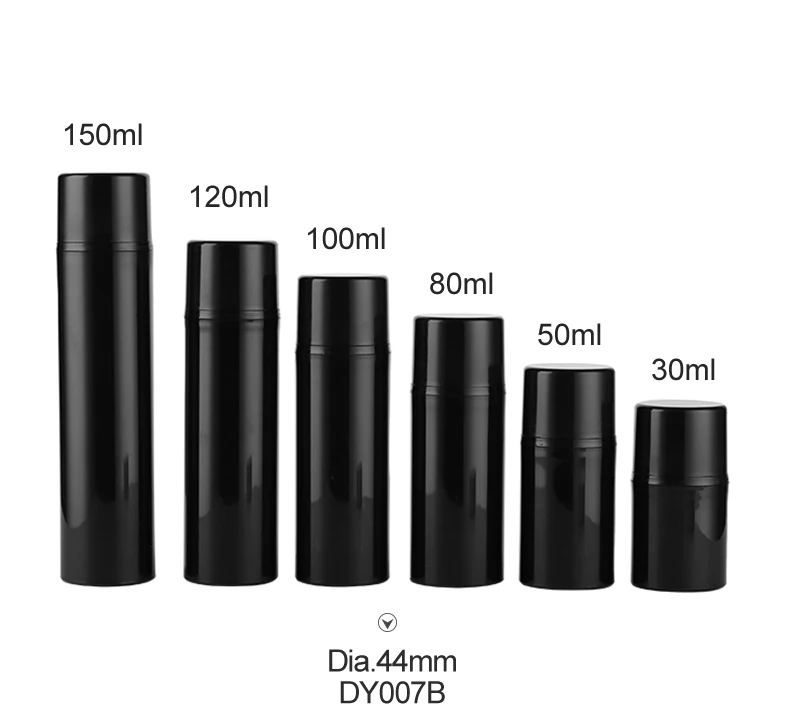
Our Black PP Airless Pump Lotion Bottle is designed for skincare and personal care products that need controlled dispensing and a clean, modern package. The bottle uses polypropylene, commonly known as PP, as the main bottle material. It combines a lightweight structure with an airless dispensing design and can be used for lotions, creams, emulsions, serums, moisturizers and other beauty formulations.
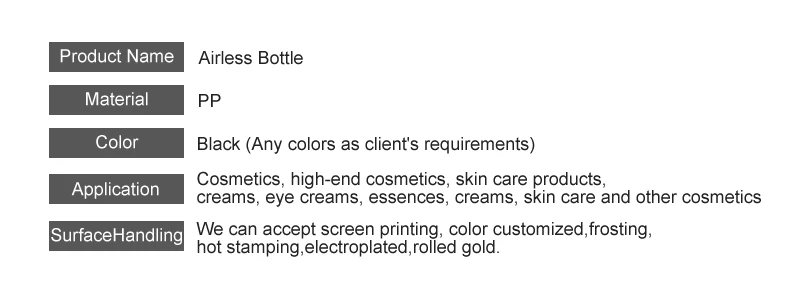
The black appearance gives the bottle a simple and professional look. At the same time, the surface can be customized with different colors, printing, frosting, hot stamping, electroplating and other finishing options according to the customer's packaging concept.
I work with cosmetic brands, packaging traders and OEM manufacturers, so I understand that the actual requirement is usually more than “I need a black bottle.” Customers may need a certain capacity, pump feel, decoration method, color, carton configuration or delivery schedule. Our job is to make these details work together before mass production starts.

A Black PP Airless Pump Lotion Bottle is a cosmetic dispensing container made mainly from polypropylene and equipped with an airless pumping structure. It is designed to deliver skincare or personal care formulations through the pump instead of requiring the user to pour the product out of the bottle.
The word “airless” is important here. Unlike a basic bottle with an open internal space above the product, an airless package uses an internal dispensing mechanism that moves the product upward as it is used. Depending on the specific airless design, this can reduce the need for outside air to enter the product chamber during normal dispensing.
I usually explain it in a very simple way: the customer presses the pump, the mechanism creates a controlled dispensing action, and the internal system moves the formulation toward the outlet. The exact internal construction can vary between different airless bottle designs, so I always recommend testing the actual bottle with the customer's formula rather than assuming that every formula will behave in exactly the same way.
This point matters for skincare packaging. A lotion may be quite fluid, while a cream or serum can be much thicker. A package that works well with one formula may not give the same dispensing result with another. For this reason, pump compatibility and formula testing should be part of the development process.
| Packaging Type | Typical Dispensing Method | Common Cosmetic Uses | Development Consideration |
|---|---|---|---|
| Standard Open Bottle | Pouring or direct dispensing | Lotions, cleansers, body products | Formula flow and opening design |
| Pump Bottle | Mechanical pump | Lotions, liquid skincare, cleansers | Pump compatibility and dose |
| Airless Pump Bottle | Airless dispensing mechanism | Serums, lotions, creams, emulsions | Formula viscosity and pump testing |
| Jar | Manual pickup | Creams, masks, balms | Opening size and user contact |
Source note: The comparison above is a practical packaging comparison rather than a performance claim. Cosmetic Packaging and labeling are covered by ISO 22715:2006, while ISO 22716:2007 provides guidelines related to cosmetic production, control, storage and shipment. Both standards remain current according to ISO's published information.
The working principle sounds complicated until we break it into a few simple steps.
First, the cosmetic formula is filled into the bottle. Inside the container, the product sits above an internal moving component, commonly designed as a piston or similar airless mechanism depending on the bottle structure.
When the user presses the pump, the pump assembly creates pressure that moves the formulation toward the dispensing outlet. As the product is removed, the internal mechanism moves upward to occupy the space left by the product.
The user does not need to turn the bottle upside down or scoop the product out by hand. The pump provides a more controlled way of taking the product from the package.
There are several practical benefits to this structure. One is dispensing control. Instead of pouring a large amount of lotion from a wide opening, the user can press the pump and release a smaller amount. Another is convenience. A pump is easier to operate during daily skincare routines, especially when the user's hands are already wet or covered with product.
The airless structure is also useful when a brand wants to create a more enclosed dispensing experience. However, I avoid making the mistake of saying that every airless bottle automatically makes every cosmetic formula last longer or prevents all possible product degradation. The real result depends on the formula, package design, filling process, storage environment and product compatibility.
For a new product, I normally suggest checking the complete system rather than looking only at the bottle. The formula, pump, actuator, bottle, internal mechanism and decoration should be treated as one packaging project.
PP, or polypropylene, is widely used in plastic packaging. For our airless bottle range, PP provides a practical balance between lightweight handling and everyday packaging requirements. The bottle is suitable for skincare and personal care applications where convenient transportation and user handling are important.
The black body creates a clean visual style that works well with many skincare concepts. It can fit minimalist packaging, men's skincare, professional skin treatment lines and other cosmetic product designs.
For brands that already have a specific visual identity, the standard black appearance can also be adjusted through different surface decoration options. We can discuss color matching, printing, frosting, hot stamping, electroplating and other finishing requirements according to the project.
The airless structure provides controlled dispensing through the pump. This makes the package suitable for products that are normally used in small quantities, such as facial lotion, serum, cream and moisturizer.
One reason customers choose plastic Airless Packaging is simple: it is practical. The bottle is easy to handle during filling, shipping and daily use. This matters when the final product has to travel across countries before reaching the consumer.
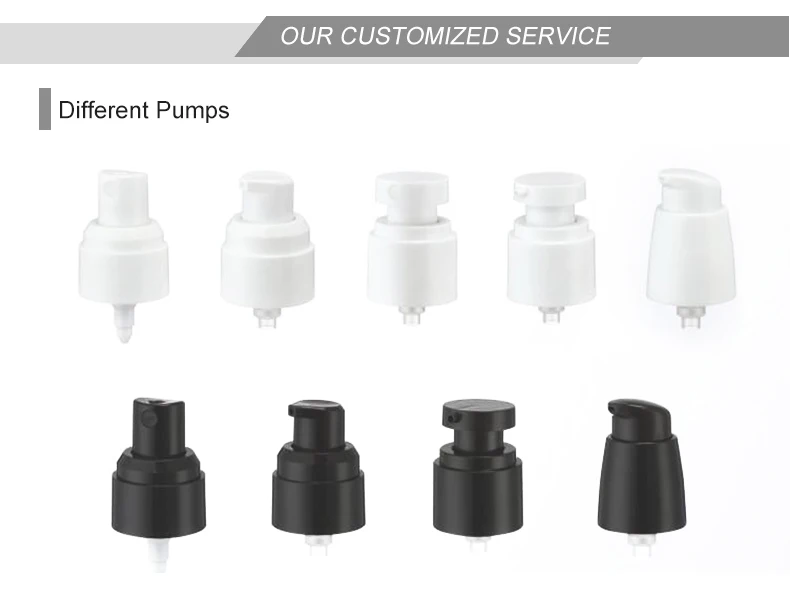
Our work does not stop at supplying a standard bottle. We provide OEM and ODM services based on customer drawings or samples. Depending on the project, we can support mold development, color matching, printing, hot stamping, frosting, electroplating and pump-head selection.
| Feature | What It Means in Practice | Why It Matters to a Brand |
|---|---|---|
| PP Material | Lightweight plastic bottle construction | Practical handling and shipping |
| Airless Pump | Controlled dispensing mechanism | Convenient daily product use |
| Black Finish | Clean and consistent appearance | Works with many brand styles |
| Surface Decoration | Printing, frosting, hot stamping and more | Supports brand customization |
| OEM / ODM | Development based on drawings or samples | Useful for customized packaging projects |
| Multiple Pump Options | Matching pump heads available | Helps match dispensing requirements |
Source note: The feature descriptions above are based on our supplied product specifications and manufacturing capabilities. ISO 22715:2006 specifically addresses cosmetic packaging and labeling requirements, which is why packaging development should consider more than appearance alone.
When I discuss an Airless Cosmetic Bottle with a customer, I do not start with decoration. I start with the product that will go inside it.
The first question is usually the formula. Is it a light lotion? A thicker cream? A serum? An emulsion? How easily does it move through the dispensing system? Does the customer need a small controlled dose or a larger amount each time?
The second question is the bottle structure. The bottle, pump and internal airless mechanism have to work together. If the pump is too difficult to press, the consumer will not enjoy using the product. If the dispensing amount is inconsistent, the packaging may not meet the brand's expectations.
The third question is appearance. A black bottle sounds straightforward, but black can mean different things in actual production. A customer may want a glossy black, matte black, frosted black or a black finish with metallic decoration. These details need to be confirmed during sample development.
The fourth question is manufacturing tolerance. Injection molding is a repeat production process, but plastic parts still need suitable dimensional control. The bottle body, pump connection, cap and other matching components must fit correctly. We therefore check dimensions and assembly during production.
The fifth question is transportation. A Cosmetic Bottle may be manufactured in China, filled in another facility and finally sold on another continent. Packaging therefore needs to survive handling through several stages. We check the packaging condition before shipment and use protective polybags, inner boxes and export cartons. Pallets or wooden cases can also be arranged when required.
These are not glamorous details, but they are the details that usually determine whether a packaging project goes smoothly.
Facial lotion is one of the natural applications for this packaging format. The pump gives users a simple way to dispense the product without opening a wide container every time.
Serums are often used in relatively small amounts, so controlled dispensing can be useful. For a serum project, I recommend checking the actual viscosity and formula behavior before confirming the final pump specification.
Face creams can have a thicker texture than ordinary lotions. An airless pump bottle can be considered when the formulation and pump system have been tested together.
Daily moisturizers are another common application. The black bottle can work well for both simple and more premium-looking skincare designs, depending on the surface treatment.
Emulsions vary considerably from one formula to another. That is why we treat product compatibility as a real development step rather than simply assuming that the same pump will work for every emulsion.
The black PP Airless Bottle is also suitable for men's skincare packaging. The dark appearance gives the package a straightforward look without requiring complicated decoration.
For OEM and private label brands, packaging often needs to be customized around an existing brand identity. We can support custom colors, printing and surface finishing, making the bottle suitable for different cosmetic product lines.
| Product Type | Potential Packaging Fit | Recommended Development Check |
|---|---|---|
| Skin Care Lotion | High | Viscosity and pump output |
| Facial Serum | High | Formula flow and dose consistency |
| Face Cream | Suitable after testing | Formula viscosity and pump performance |
| Moisturizer | High | Dispensing amount and compatibility |
| Emulsion | Suitable after testing | Formula behavior inside the dispensing system |
| Personal Care Products | Application dependent | Formula and package compatibility |
Source note: The application recommendations in this table are practical packaging recommendations based on the supplied product specifications. They are not claims that every formula will perform identically in the same package. ISO 22716 covers quality-related guidance for cosmetic production, control, storage and shipment.
Our manufacturing process starts long before the final bottle reaches the carton. Yuyao Dingyu Plastic Industry Co., Ltd. was founded in 2014 and operates its own manufacturing factory in Yuyao, Ningbo, Zhejiang Province. Our facility covers approximately 5,000 square meters and includes mold development workshops, injection molding machines and testing instruments.
For a standard order, the first step is confirming the product specification. We check the bottle design, dimensions, pump type, color, decoration requirements, capacity and intended application.
If the customer has an existing drawing or sample, we can develop the packaging around that reference. For a new design, our team can discuss mold development and production feasibility before moving into the sample stage.
Injection molding is then used to form the plastic components. After molding, the components are inspected and prepared for assembly. Depending on the product structure, this may include fitting the pump, cap and other matching parts.
Decoration is handled according to the customer's requirements. We offer color matching, silk-screen printing, hot stamping, frosting, electroplating and other surface finishes. Not every decoration method is necessary for every bottle. I normally recommend keeping the finish aligned with the brand design and target cost rather than adding decoration simply because it is available.
Samples are an important part of our process. We can provide samples for customer evaluation before mass production. This gives the customer an opportunity to check the actual appearance, pump operation, assembly and overall packaging concept.
After sample approval and order confirmation, standard PP Airless Bottle production normally takes around 15–30 days. New molds, special colors and special surface finishes may require additional time, so the final schedule is confirmed according to the actual project.
Before delivery, we check appearance, dimensions, dispensing or pump function and packaging condition. These checks are practical because small problems are much easier to solve before shipment than after thousands of pieces have arrived at the customer's warehouse.

From my perspective, the biggest value of a cosmetic packaging supplier is not simply having a catalog of bottles. It is being able to handle the whole project when the requirements become more specific.
We have our own manufacturing facility and provide OEM and ODM services. Customers can send us drawings, samples or packaging concepts, and we can discuss the next production step from there.
Our product range includes airless Cosmetic Bottles, lotion bottles, perfume bottles, PET bottles and other beauty packaging products. This makes it easier for customers who are building several products under the same cosmetic brand.
We also have experience with mold development and surface finishing. If a standard bottle is not enough, we can discuss a new mold, color matching, silk-screen printing, hot stamping, frosting or electroplating.
Another point I consider important is sample evaluation. We do not expect a customer to make a large production commitment without first seeing and checking the packaging. Samples can be supplied for evaluation before mass production, helping reduce unnecessary production risk.
Our quality control covers the production process and final product checks. Before shipment, we inspect appearance, dimensions, dispensing or pump function and packaging condition.
For international customers, we have self-operated import and export rights and established foreign-trade workflows. Our products are exported to North America, South America, Europe, Southeast Asia, the Middle East, Australia and other markets.
We normally respond to customer inquiries within 24 hours and aim to provide tailored packaging solutions within one week. For us, communication is part of manufacturing. A technically good bottle is not very useful if the supplier cannot clearly communicate specifications, samples, production schedules and shipment arrangements.
Customer sends product requirements, drawings or samples.
We confirm bottle structure, pump, capacity and decoration requirements.
We discuss formula compatibility and application conditions.
Sample or prototype is prepared for customer evaluation.
Customer confirms the sample and order details.
Mass production begins after approval and order confirmation.
Products are inspected for appearance, dimensions, pump function and packaging.
Goods are packed and shipped according to the agreed delivery method.
This workflow is especially useful for overseas cosmetic brands and packaging traders because it creates a clear path from an initial idea to a finished shipment.
The bottle is designed for skincare and personal care products such as lotions, serums, creams, emulsions, moisturizers and other beauty formulations. However, compatibility should always be tested with the actual formula before mass production.
Yes. The main bottle material is polypropylene, commonly called PP. The exact construction of the complete packaging system can include other components such as the pump and matching parts.
Yes. Color matching is one of the customization services we provide. For a custom project, we recommend confirming the required color through samples before mass production.
Yes. We can discuss silk-screen printing, hot stamping and other surface decoration options. The suitable method depends on the artwork, bottle surface and desired visual effect.
Yes. We provide new mold development as part of our OEM and ODM services. Customers can provide drawings, samples or design requirements for discussion.
Yes. We can provide samples for customer evaluation. I strongly recommend checking the bottle and pump with the actual product formula whenever possible before confirming a large production order.
For standard PP Airless Bottles, the typical production cycle is around 15–30 days after sample approval and order confirmation. Custom colors, special finishes and new mold development may require additional time.
Our general payment arrangement is 30% deposit and 70% balance before shipment, subject to the specific order agreement.
We can use protective polybags, inner boxes and strong export cartons. Pallets or wooden cases can also be arranged when required by the customer or shipping conditions.
We can arrange sea freight, air freight or express delivery depending on the order quantity, destination and required delivery schedule. The most suitable method is confirmed according to the actual shipment.
Before delivery, we check appearance, dimensions, dispensing or pump function and packaging condition. For customized projects, additional inspection points can be discussed according to the agreed specification.
No packaging should be treated as universally compatible with every formula. Viscosity, texture, ingredients, filling conditions and dispensing requirements can affect performance. For a new formulation, I recommend conducting a practical compatibility and dispensing test with the final bottle and pump.
Yes. Our product range covers airless bottles, lotion bottles, perfume bottles, PET bottles and other cosmetic packaging. We also provide mold development, color matching, printing and other finishing services, allowing us to support projects from sample development through mass production.
The Black PP Airless Pump Lotion Bottle is built around a simple idea: make cosmetic packaging practical, easy to customize and suitable for modern Skincare Products.
Its PP construction provides a lightweight packaging option, while the airless pump structure offers controlled dispensing. The black appearance gives brands a clean starting point for their packaging design, and additional options such as color matching, silk-screen printing, hot stamping, frosting and electroplating allow the final appearance to be adjusted around the brand identity.
For us, the bottle itself is only one part of the job. The more important part is making sure the bottle, pump, formula, decoration, production schedule and shipping plan all make sense together.
At Yuyao Dingyu Plastic Industry Co., Ltd., we support OEM and ODM cosmetic packaging projects from sample testing and prototype development to mass-order delivery. With our own manufacturing facility, mold development capability, injection molding equipment and testing instruments, we can work with customers who need both standard packaging and customized solutions.
For standard PP Airless Bottle orders, production is normally around 15–30 days after sample approval and order confirmation. Before shipment, we inspect the products and prepare them in suitable export packaging. Sea, air and express shipping options are available depending on the project.
If you are sourcing a Black PP Airless Bottle, airless pump lotion bottle, PP airless cosmetic packaging or customized skincare packaging, we can start with your required capacity, formula type, pump requirement, artwork or existing sample. From there, we can work through the practical details and prepare a suitable packaging solution for your project.
Reference sources for packaging and manufacturing context:
ISO 22715:2006, Cosmetics — Packaging and labelling, International Organization for Standardization.
ISO 22716:2007, Cosmetics — Good Manufacturing Practices — Guidelines on Good Manufacturing Practices, International Organization for Standardization. ISO states that this standard provides guidelines for the production, control, storage and shipment of Cosmetic Products and that the current edition was confirmed in 2022.
 RELATED

dy1@dingyu-plastic.com
Contact Person:Mr. Fu
Mobile Number:+86 13736020285
Email:dy1@dingyu-plastic.com
Business Address:No.59 Dongheng Road, Mazhu Town, Yuyao City, Zhejiang Province, China

This website uses cookies to ensure you get the best experience on our website.

 Español
 Français
 Deutsch
 한국어
한국어


 WhatsApp
 Phone
Phone E-mail
 Message